



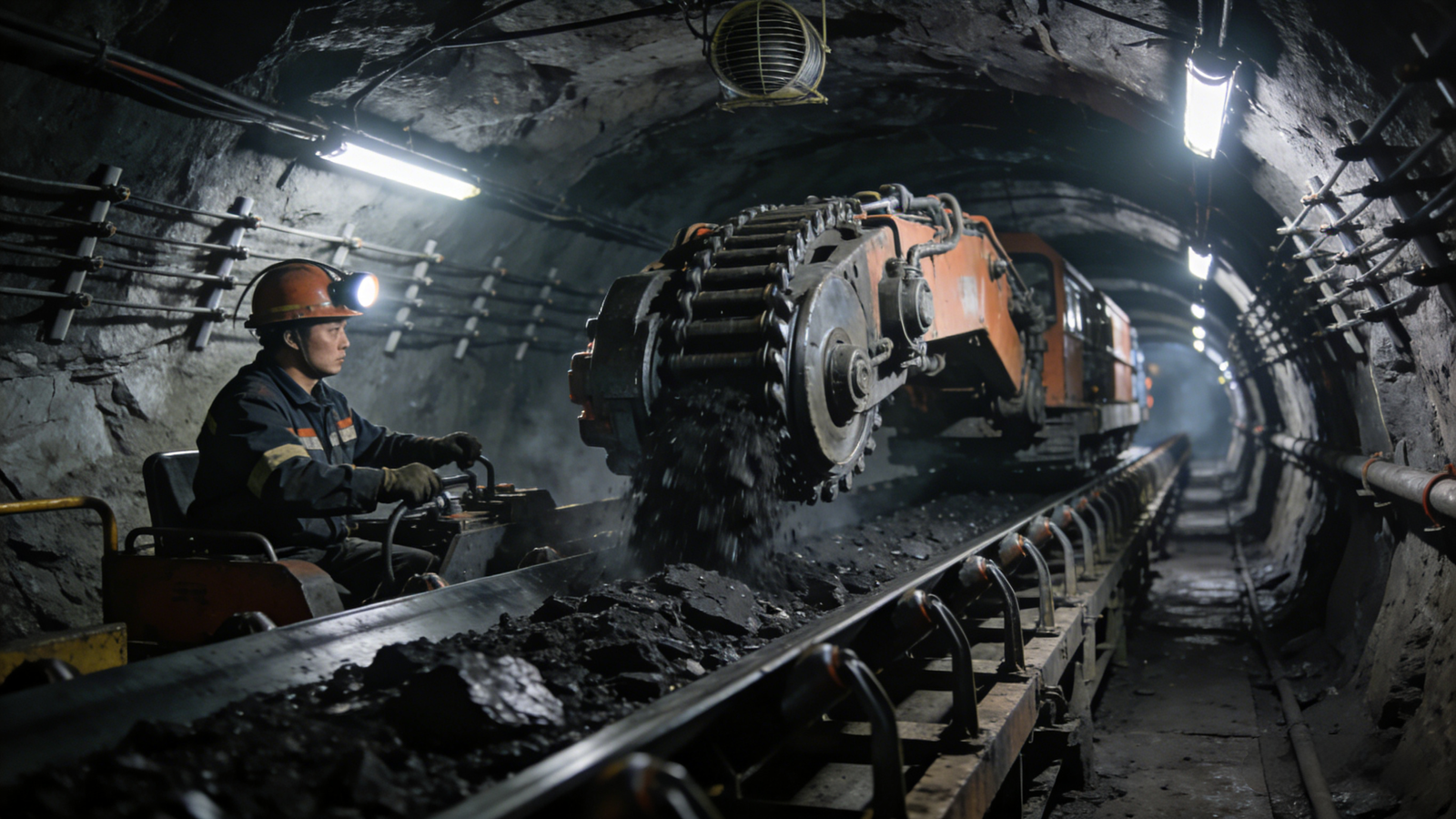
 Standards and Regulations for Mining Bolt Nuts
Mining bolt nuts are subject to a range of international, regional, and national standards and regulations that cover materials, mechanical performance, safety, and installation requirements. The key standards and requirements are summarized in this document for reference in production, quality control, purchasing, and on-site application.
1. Core International Standards (General Basis)
Standard Number | Standard Title | Key Content | Application Scope |
ISO 898-2 | Mechanical properties of fasteners — Nuts made of carbon steel and alloy steel | Specifies property classes (8, 10, 12), proof load, hardness, and thread accuracy. | Globally adopted; 8.8 / 10.9 / 12.9 grades are commonly used in mining. |
ASTM A194/A194M | Carbon and alloy steel nuts for high-pressure and high-temperature service | Defines material composition (e.g., Grade 4 is carbon-molybdenum steel), heat treatment requirements, hardness criteria, and proof load specifications. | North American market; widely applied for high-strength mining bolt nuts. |
EN 14399-4 | High-strength structural bolting assemblies — Nuts | Designed to match high-strength bolts, covering preload requirements, anti-loosening performance, and fatigue resistance. | EU member states and countries/regions adopting European standards. |
2. Chinese Industry Standards (Coal Mine / Mining Specific)
2.1 MT/T 146.2-2011
Title: Resin rock bolts — Metal rods and accessories
Key Requirements: The load-bearing efficiency factor of the nut assembly shall not be less than 0.90. It specifies thread accuracy, matching requirements with the bolt rod, and mandates that the load capacity of the pallet and nut must be at least 1.2 times the yield strength of the bolt.
2.2 GB/T 35056-2018
Title: Technical specification for bolt support in coal mine roadways
Key Requirements: Emphasizes strength matching between nuts and bolts. For example:
<!--[if !supportLists]-->• <!--[endif]-->M16 bolt: The across flats of the matching nut shall be no less than 38 mm.
<!--[if !supportLists]-->• <!--[endif]-->M20 bolt: The across flats of the matching nut shall be no less than 42 mm.
It also clearly stipulates installation torque and preload requirements.
2.3 GB/T 3098.2
Title: Mechanical properties of fasteners — Nuts
Key Requirements: Equivalent to ISO 898-2, governing the mechanical performance of nuts in the Chinese market, including strength grades, hardness, and proof load.
3. U.S. / EU Safety Regulations (Installation and On-Site Management)
3.1 U.S. 30 CFR § 75.204
Scope: Roof bolt support requirements for coal mines
Key Provisions: Mandates the inspection frequency of installation torque and preload (1 out of every 4 bolts shall be sampled). Non-tensioned grouted bolts must pass a 150 ft-lb torque test to ensure installation quality.
3.2 EU Directive 89/391/EEC
Scope: Machinery Safety Directive
Key Provisions: Mining bolt nuts must comply with CE marking requirements, including meeting basic safety criteria such as mechanical safety, anti-loosening performance, and corrosion resistance.
3.3 Australian AS 3850
Title: Underground mine support systems
Key Provisions: Covers installation specifications, preload requirements, pull-out testing methods, and periodic inspection rules for rock bolt nuts.
4. Key Technical and Safety Requirements (Mandatory)
4.1 Materials and Strength
<!--[if !supportLists]-->• <!--[endif]-->Common Materials: 45# steel, 20MnTiB, 35CrMo, which must comply with the composition requirements of GB/T 1499.2 (steel bars) or ASTM A194 (nuts).
<!--[if !supportLists]-->• <!--[endif]-->Strength Matching: The strength grade of the nut must match that of the bolt. For example, a 10.9-grade bolt shall be paired with a Grade 10 or higher nut, and the proof load of the nut shall not be less than 1.2 times the yield load of the bolt.
4.2 Thread and Structure
<!--[if !supportLists]-->• <!--[endif]-->Thread Accuracy: Complies with GB/T 197 or ISO 965-1. Common thread specifications in mining include M16, M20, and M22. The nominal diameter of the thread at the bolt tail is usually 2 mm larger than that of the bolt body.
<!--[if !supportLists]-->• <!--[endif]-->Anti-Loosening Design: In impact or high-vibration environments, nylon insert lock nuts (DIN 985) or all-metal lock nuts (DIN 982) shall be used, which must meet the anti-loosening standards specified in ISO 10431.
4.3 Surface Treatment and Durability
<!--[if !supportLists]-->• <!--[endif]-->Corrosion Resistance Requirements: For underground humid or corrosive environments, hot-dip galvanizing (GB/T 13912), zinc infiltration, or dacromet treatment shall be adopted. The neutral salt spray resistance shall be no less than 480 hours.
<!--[if !supportLists]-->• <!--[endif]-->Appearance Requirements: No cracks, burrs, or severe corrosion; threads shall be free of damage.
4.4 Installation and Acceptance
<!--[if !supportLists]-->• <!--[endif]-->Preload Torque: In accordance with MT/T 146.2 or GB/T 35056, the installation torque must reach the design value (e.g., 200–250 N·m is commonly used for M20 bolts). Pull-out tests shall be completed within 24 hours after installation, and the anchoring force shall not be less than the design value.
<!--[if !supportLists]-->• <!--[endif]-->Sampling Inspection Rules: Random sampling shall be conducted for each batch to inspect dimensions, hardness, and proof load. Non-conforming batches shall be re-inspected or returned.
5. Purchasing and Compliance Tips
<!--[if !supportLists]-->1. <!--[endif]-->Select Standards Based on Target Market:
<!--[if !supportLists]-->○ <!--[endif]-->North America: Prioritize ASTM A194 + ISO 898-2
<!--[if !supportLists]-->○ <!--[endif]-->EU: Adopt EN 14399 + ISO 898-2
<!--[if !supportLists]-->○ <!--[endif]-->China / Southeast Asia: Apply GB / MT + ISO system
<!--[if !supportLists]-->2. <!--[endif]-->Necessary Certificates: Suppliers shall provide material certificates (including chemical composition and mechanical properties), strength grade certificates, surface treatment test reports. For export, corresponding regional certifications (e.g., CE for the EU) shall be obtained.
<!--[if !supportLists]-->3. <!--[endif]-->Bolt Matching: The load capacity of the nut must be ≥ 1.2 times the yield strength of the bolt. Thread specifications must strictly match the bolt to avoid thread stripping or overload failure.
6. Summary
The core of compliance for mining bolt nuts lies in qualified materials, matched performance, standardized installation, and certified testing. ISO 898-2 serves as the fundamental standard, supplemented by regional/national industry standards (such as ASTM, EN, GB/MT) and local mining safety regulations (e.g., U.S. 30 CFR, China’s Coal Mine Safety Regulations) to ensure the safety and reliability of ground support systems.
Post time: 2026-01-13 17:08:28
